Beacon.
The Challenge of Real-Time Crisis Visibility
Year
When shared tools fail, uncertainty spreads faster than information.
Beacon was inspired by observations from the Tai Po fires in Hong Kong, where residents and volunteers relied on a shared Google Sheet to track apartment unit statuses, such as safe, missing, or deceased. The spreadsheet served as a powerful grassroots solution, but as submissions increased through Google Forms, update latency, conflicting edits, and poor mobile readability made it difficult for families to confirm loved ones’ safety and for firefighters to prioritize rescues effectively. The lack of spatial clarity highlighted a critical gap: during emergencies, information systems must be purpose-built, fast, and instantly legible at scale.
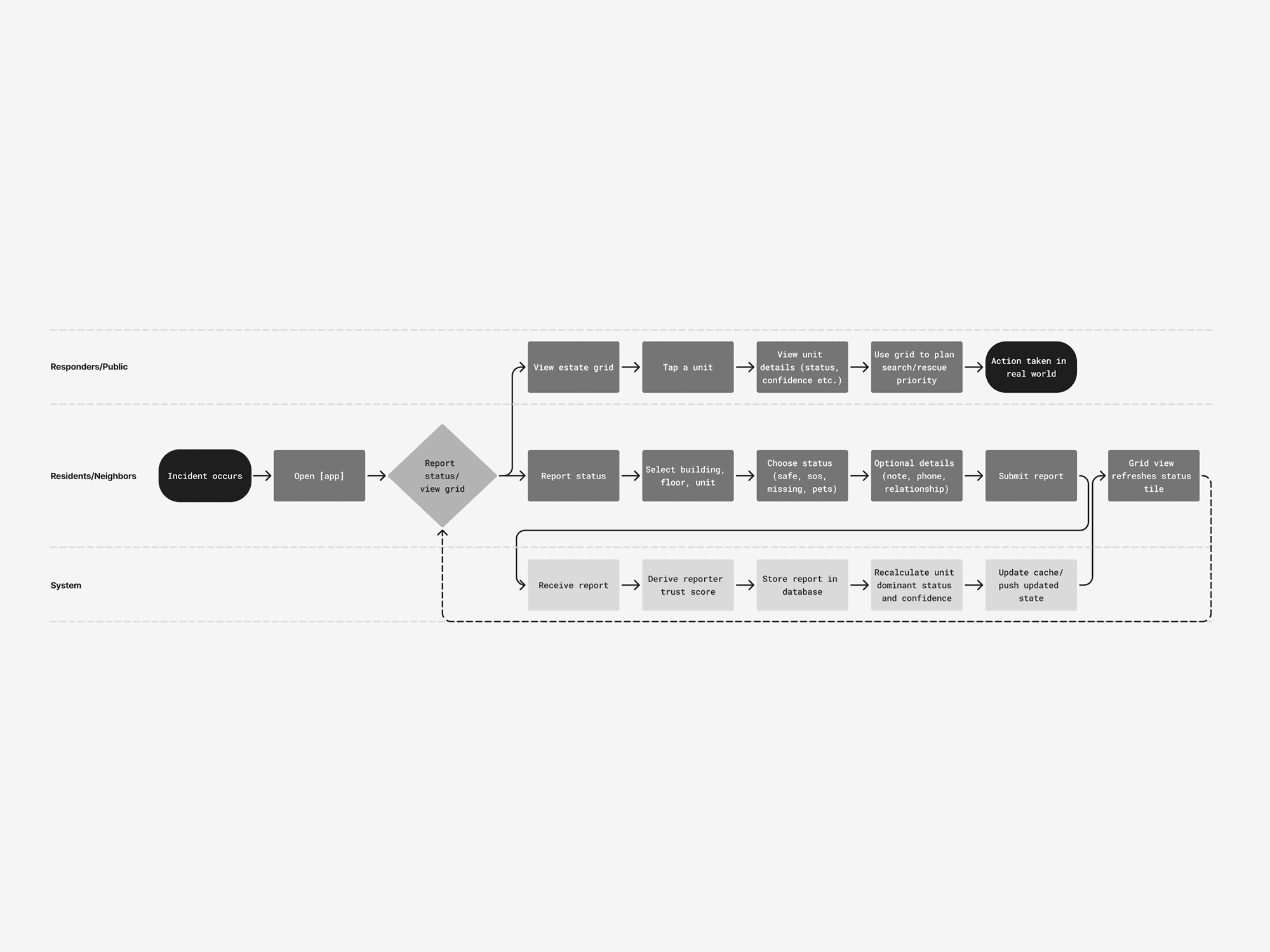
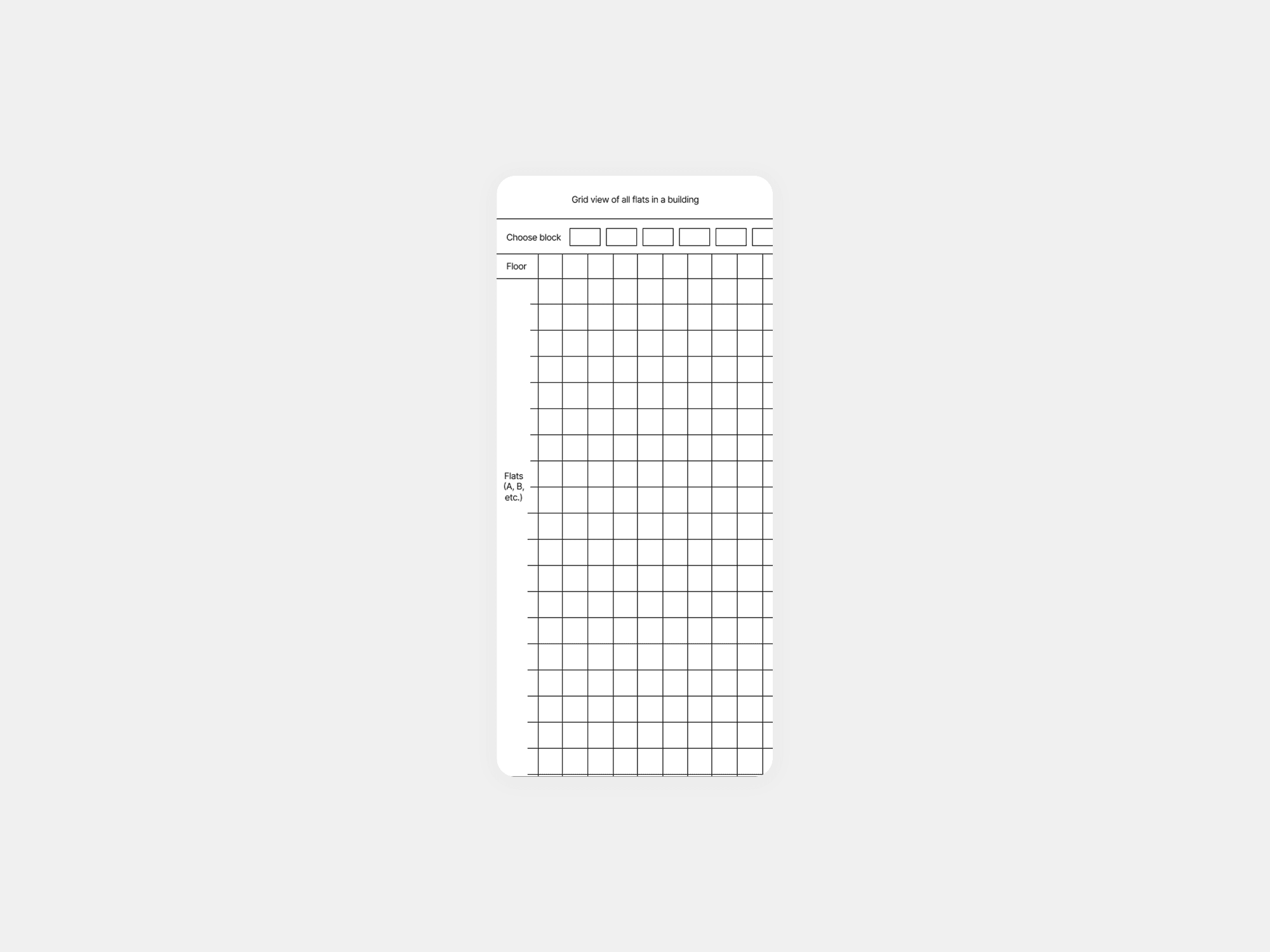
From fragmented inputs to a unified, real-time status grid.
The Beacon system reimagines emergency reporting as a structured, grid-based interface that mirrors the physical layout of residential buildings. Residents or family members can quickly report their status by selecting their building, floor, and unit, choosing predefined safety states, and optionally adding contextual details. For responders and the public, the grid provides an at-a-glance overview of the entire estate, allowing fast identification of high-risk areas without navigating dense text or lagging spreadsheets.
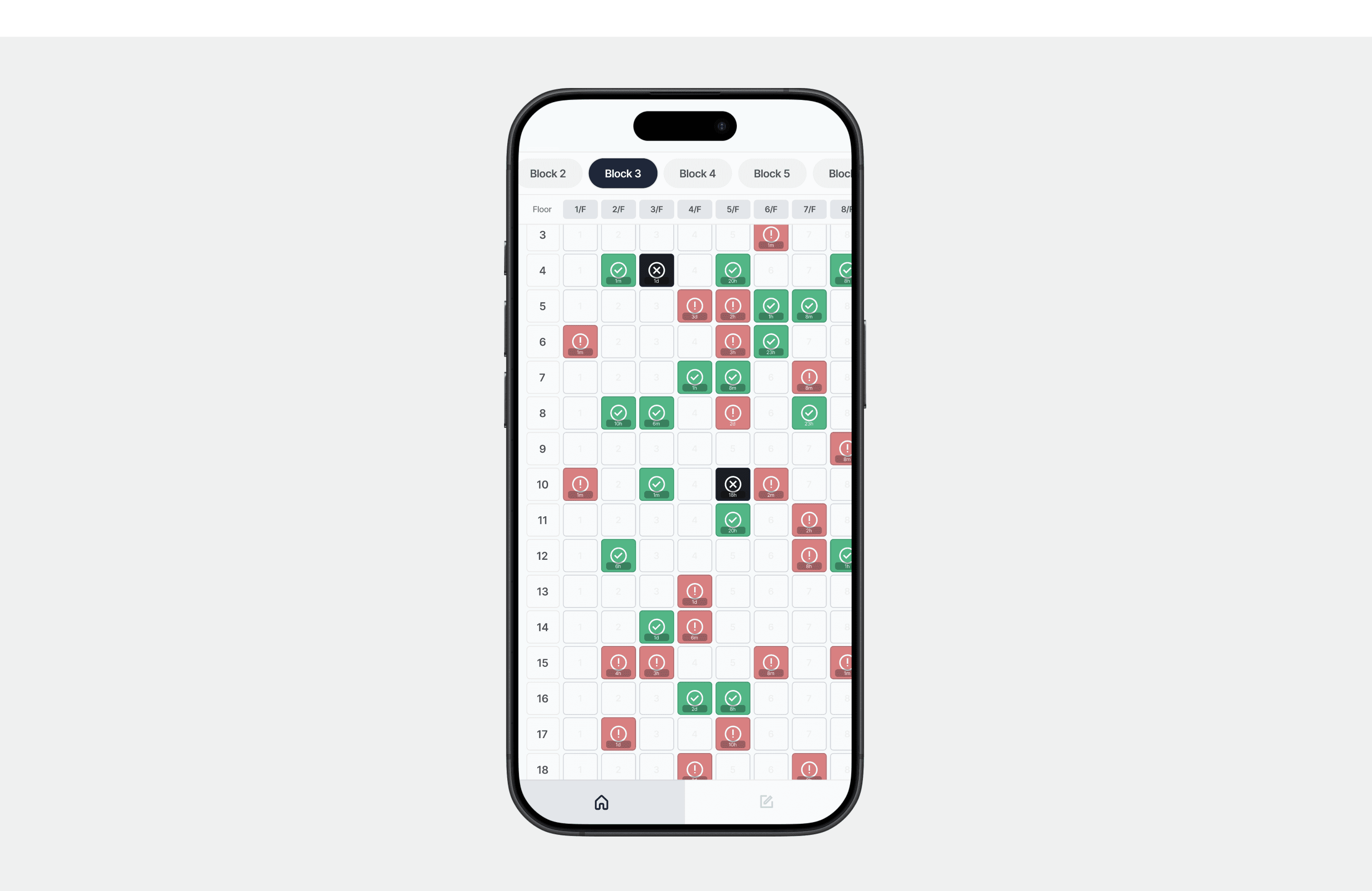
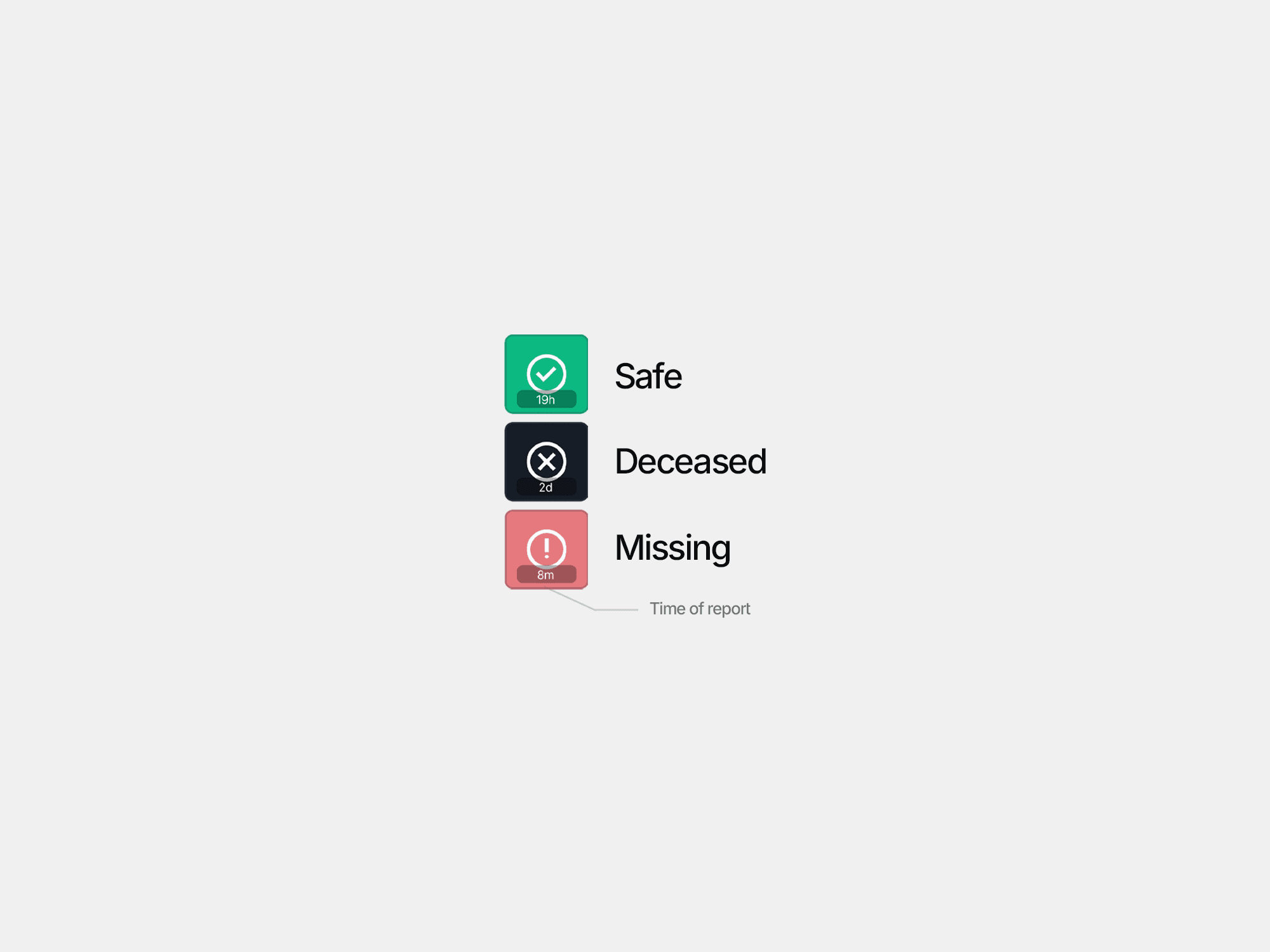
Clarity, trust, and structure matter more than features.
This was my first time building a system where clarity and urgency mattered more than visual expression, and where every decision had to hold up under stress. I learned that credibility doesn’t come from complexity, but from consistency and strong spatial logic. Since fire emergencies share similar dynamics everywhere, the system has the potential to scale globally while adapting to local contexts. I’m currently continuing this work by exploring the response side of the system!