Overlap.
A modern scheduling tool designed to help groups quickly find mutually available times through a clear, intuitive, and visually structured interface.
Year
/
The Friction of Legacy Scheduling Tools
(01)
Coordination works, but only with extra effort.
Existing group scheduling tools technically solve the problem of finding overlapping availability, but the experience often feels harder than it needs to be. Outdated interfaces, dense grids, and unclear visual hierarchy make it difficult for users to confidently enter their availability or quickly understand the outcome. Important features like accounts or dashboards are also missing, meaning events can’t be easily revisited or adjusted, forcing people to save links manually or start over entirely. These tools function, but they often do so by asking users to adapt to their limitations.
/
Reimagining Scheduling
(02)
From one-off links to a cohesive scheduling workflow.
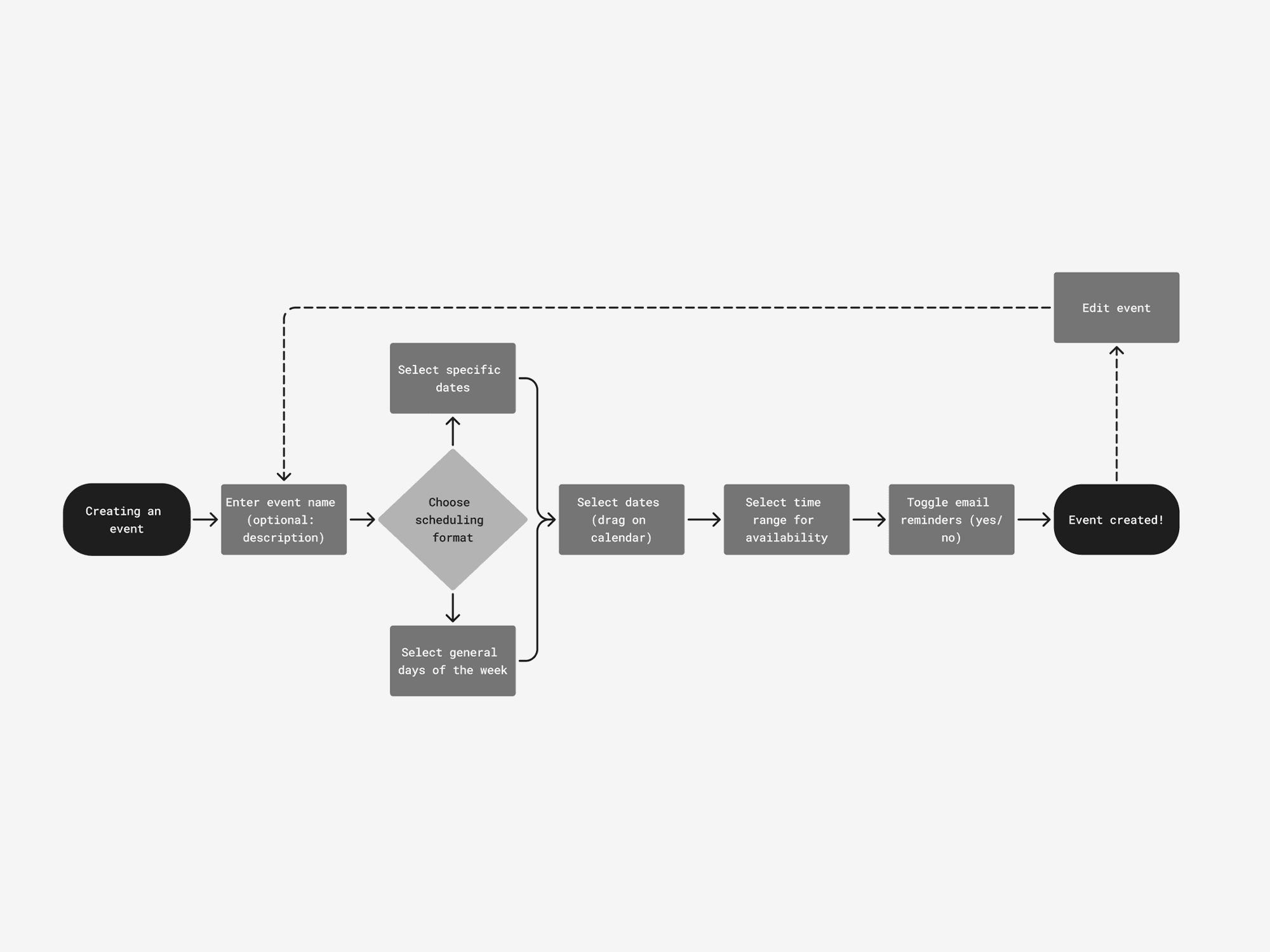
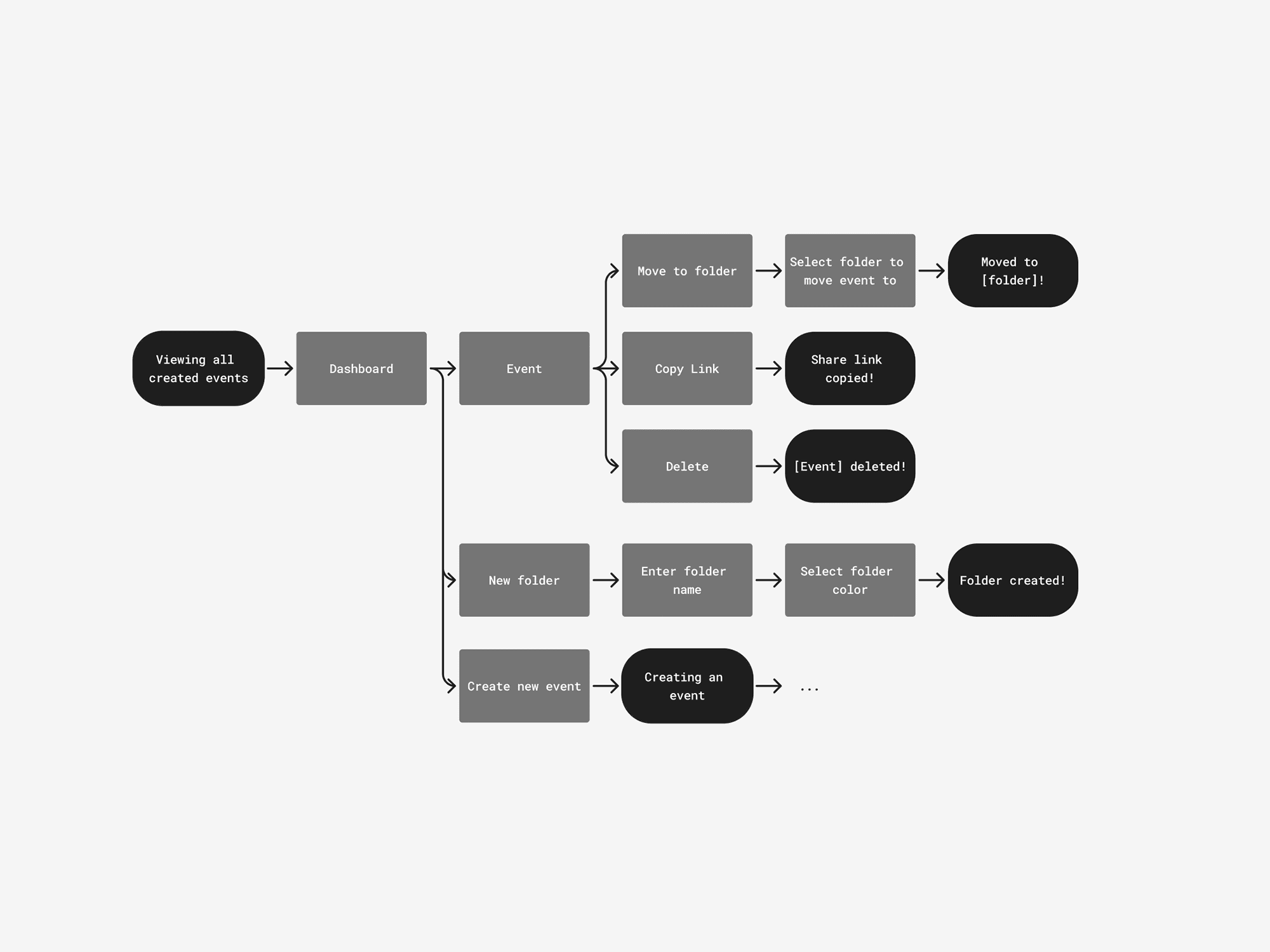
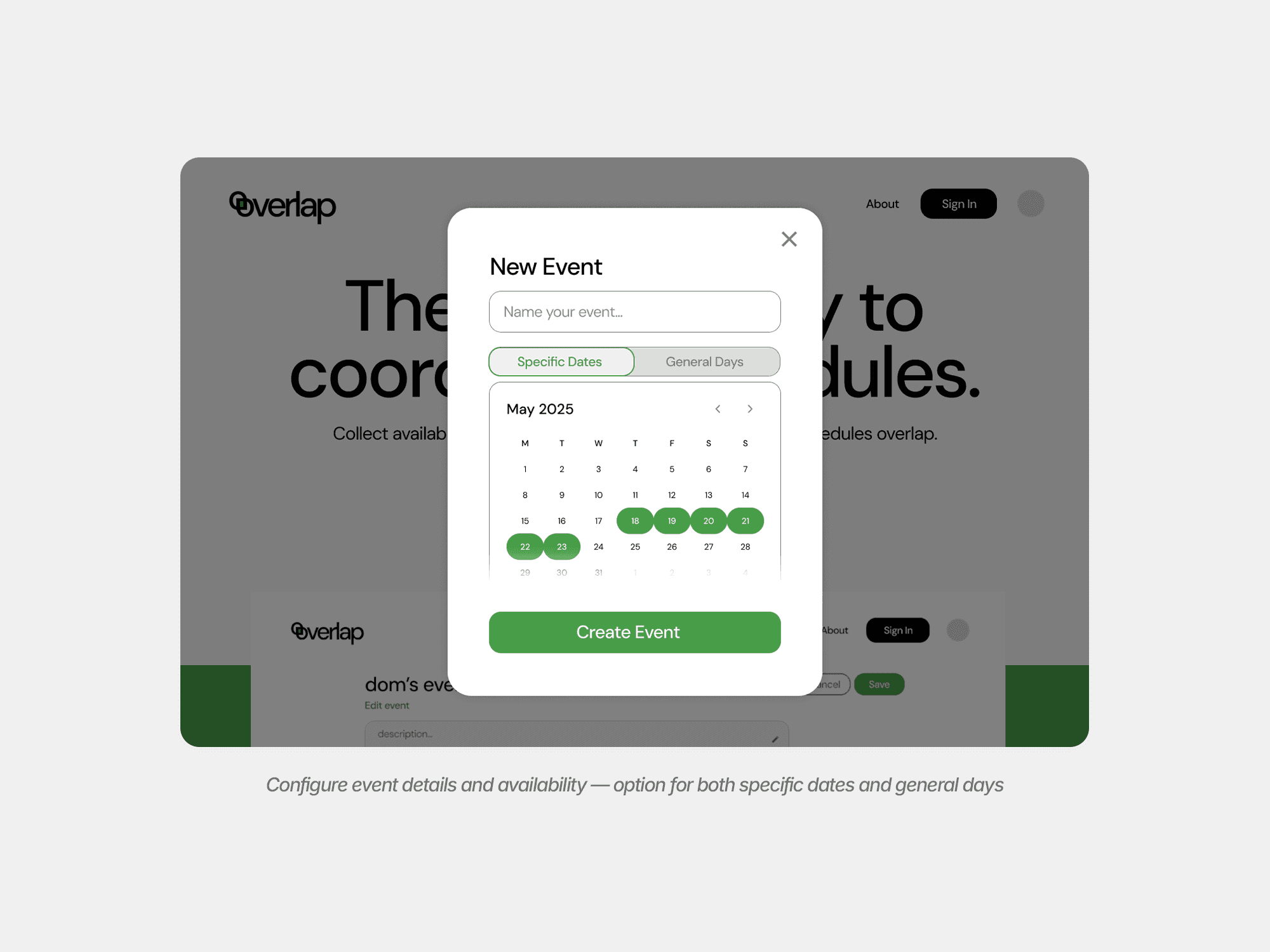
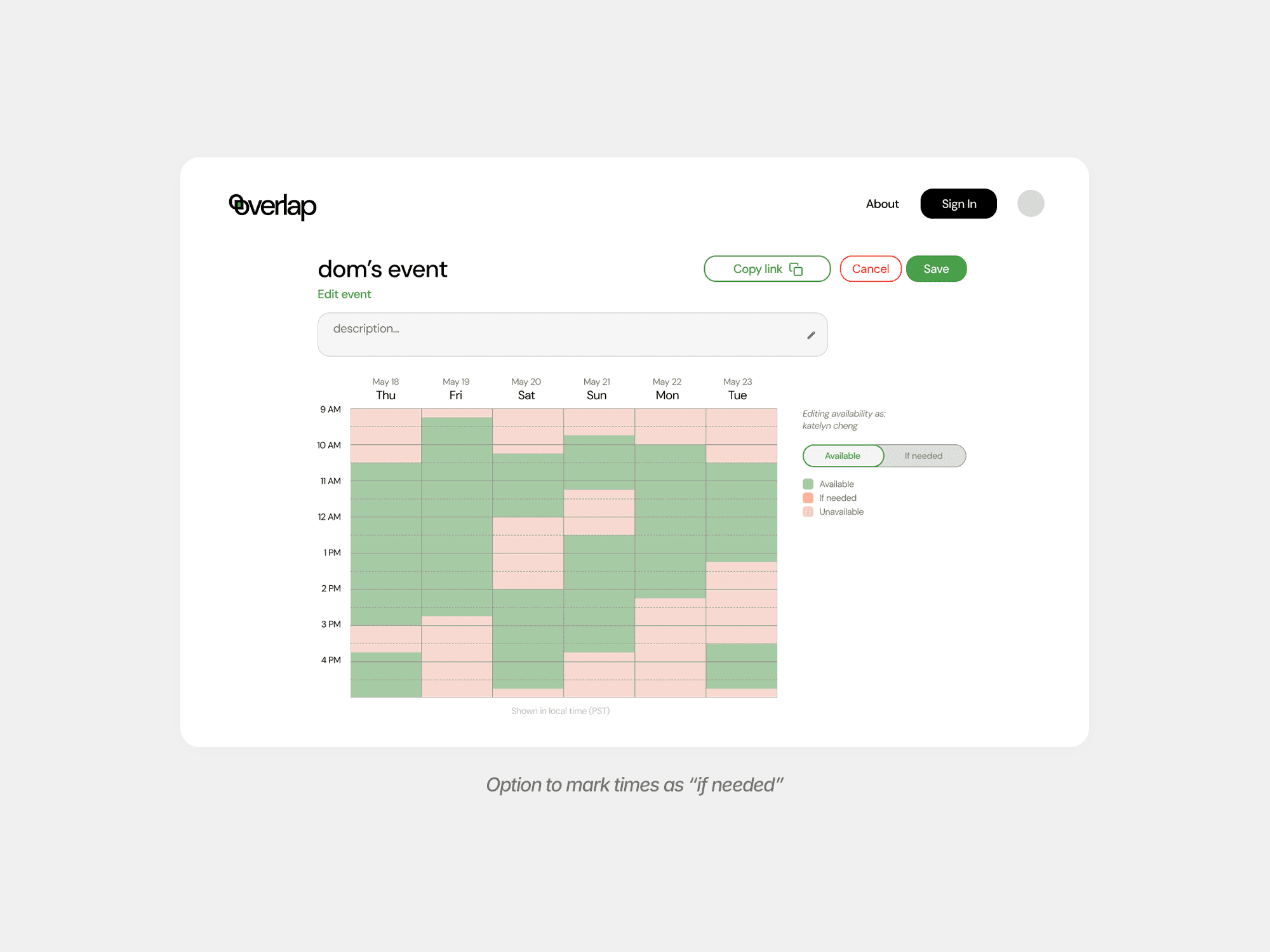
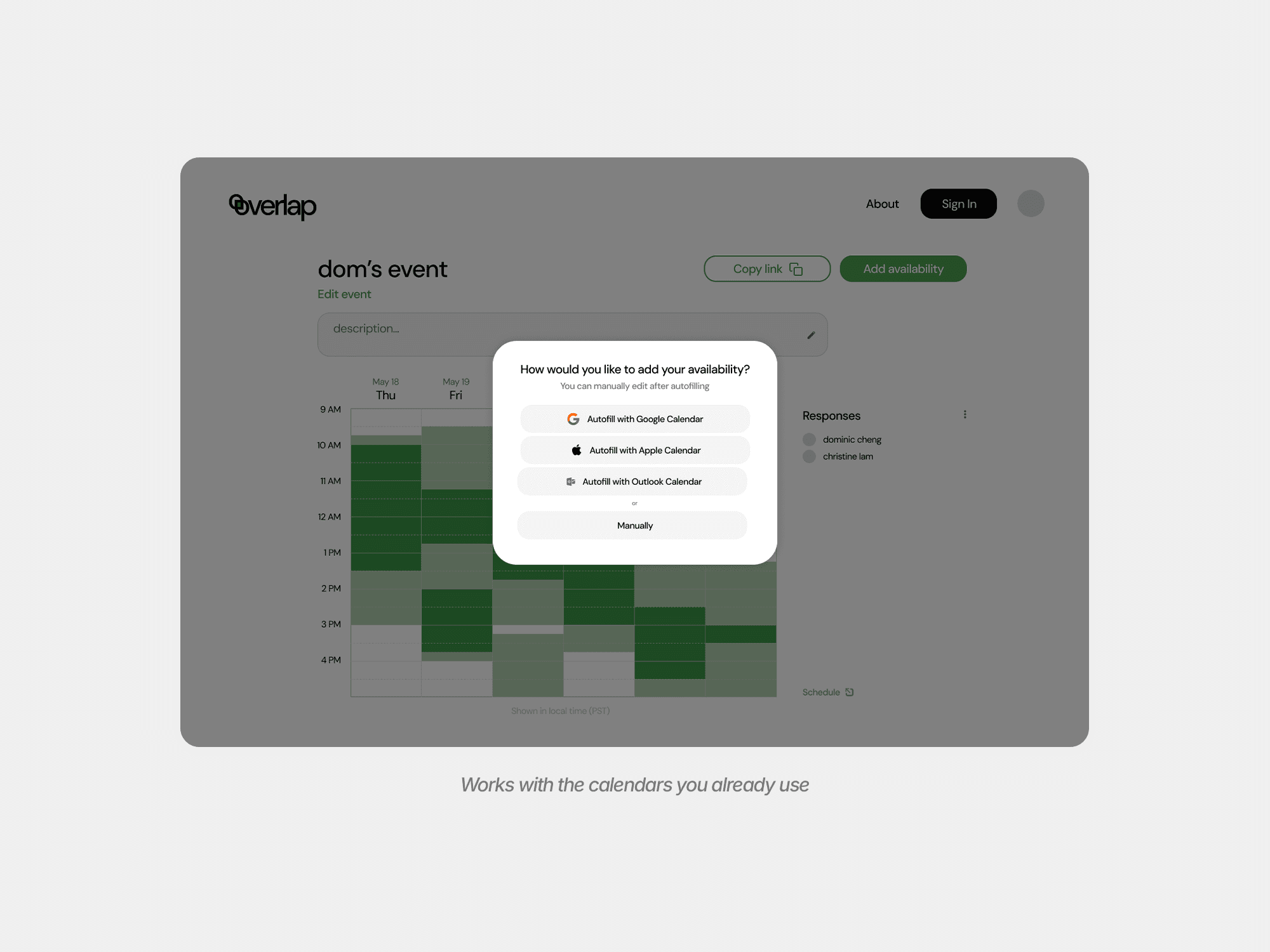
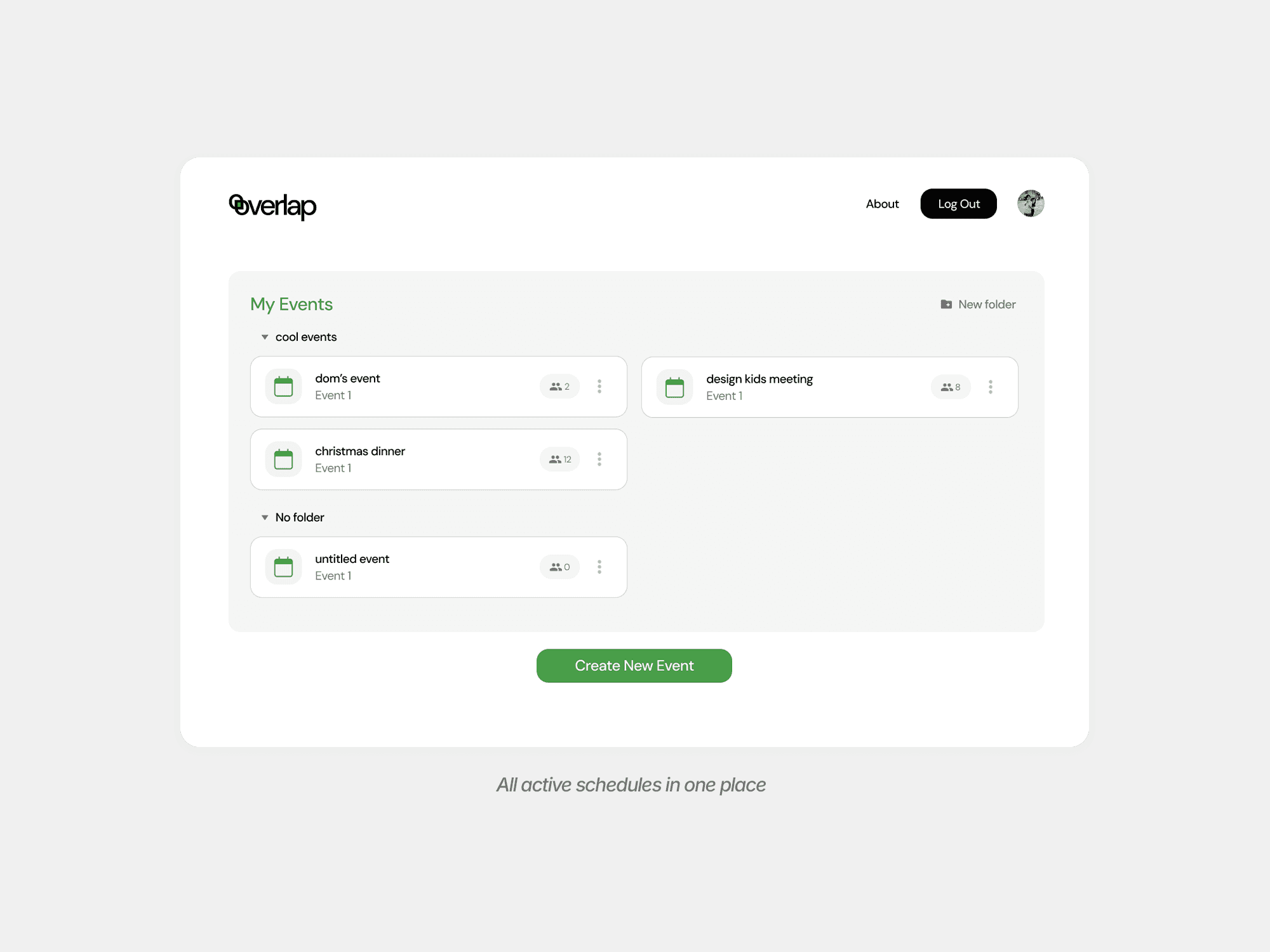
Overlap reimagines group scheduling as a complete, end-to-end experience rather than a single-use utility. The interface introduces clear visual hierarchy, improved contrast, and a refined availability grid that makes overlap immediately legible. Users can create events through flexible scheduling formats, input availability with confidence, and optionally integrate with their own Google, Outlook, or Apple calendars to reduce manual effort. An account system and event dashboard allow users to store, organize, revisit, and edit meetings over time — turning scheduling from a disposable interaction into something persistent and more pleasant to use.
/
Reflection
(03)
Good tools disappear when they feel obvious.
Designing Overlap emphasized how much friction can hide in “functional” products. I looked at visual clarity, information density, and long-term event management, and tried to reframe scheduling as an experience that supports users beyond a single decision point. The process reinforced the value of designing not just for task completion, but for continuity — recognizing that coordination is often iterative and ongoing. Overlap demonstrates how thoughtful interface structure and system-level thinking can turn a familiar but frustrating workflow into one that feels calm, efficient, and reliable.